How AI Manufacturing Solutions Are Revolutionizing Operations Right Now
The manufacturing industry stands at a critical turning point. While global supply chains grow more complex and customer demands intensify, forward-thinking manufacturers are leveraging artificial intelligence to slash operating costs by up to 35% within 90 days.
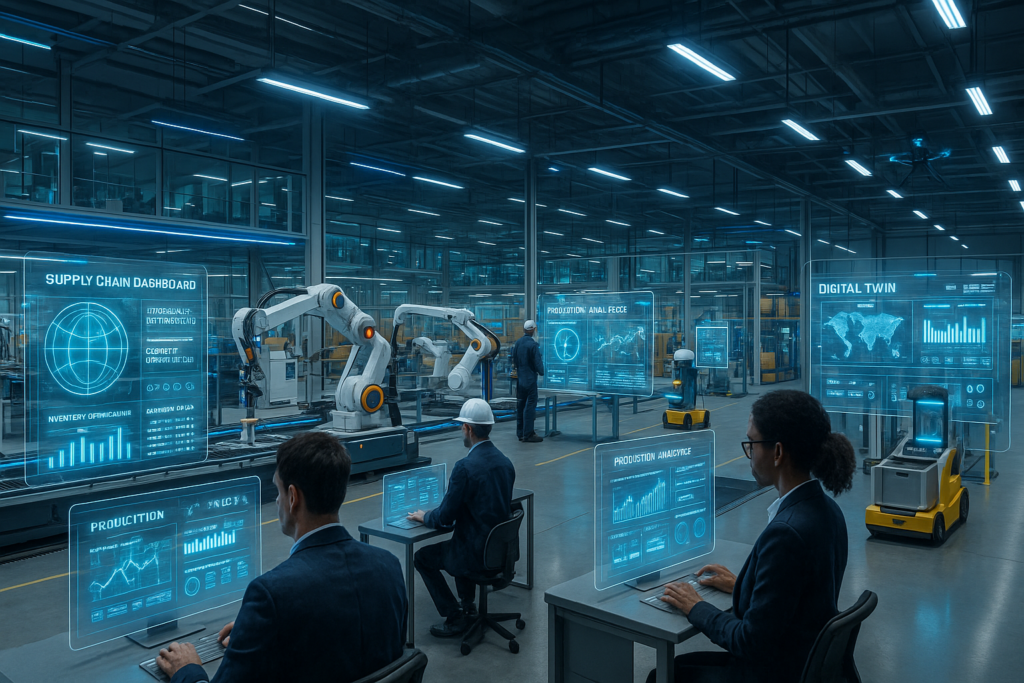
Smart factories aren’t science fiction anymore. Companies like Siemens report 30% productivity gains from AI-powered manufacturing systems, while McKinsey research shows manufacturers reducing unplanned downtime by 50% through predictive maintenance.
The manufacturers implementing AI-powered optimization today are establishing competitive advantages that will define market leadership for the next decade. Here’s exactly how they’re doing it and what you can implement in your operations within the next 90 days.
Why Traditional Manufacturing Approaches Are Failing in 2026
The Hidden Costs Crushing Manufacturing Profits
Manufacturing operations today face unprecedented complexity that traditional management approaches simply can’t handle effectively. The result? Massive hidden costs that erode profit margins and competitive positioning.
Demand Forecasting Failures Cost Millions: Traditional forecasting methods miss market shifts and seasonal variations, leading to overproduction waste or costly stockouts. The average manufacturer loses $1.1 trillion annually due to poor demand planning, according to IBM’s supply chain research.
Equipment Downtime Destroys Productivity: Unplanned maintenance shutdowns cost manufacturers an average of $50,000 per hour. With typical manufacturing plants experiencing 800+ hours of unplanned downtime annually, these losses quickly compound into millions.
Quality Control Bottlenecks: Manual inspection processes catch defects too late, creating waste and rework costs that can consume 15-20% of total production expenses. Traditional quality control also creates production bottlenecks that slow entire manufacturing lines.
Inventory Management Chaos: Balancing stock levels to meet demand while minimizing carrying costs remains manufacturing’s persistent challenge. Excess inventory ties up working capital, while insufficient stock risks production delays and customer dissatisfaction.
Supply Chain Blind Spots: Limited real-time visibility into supplier performance, logistics status, and potential disruptions leaves manufacturers reactive rather than proactive in their operations. According to the World Economic Forum, real-time visibility is now the top resilience priority for global manufacturers.
What Is AI-Powered Manufacturing and Supply Chain Optimization?
AI-powered manufacturing optimization uses machine learning algorithms, predictive analytics, and real-time data processing to automate and enhance every aspect of manufacturing operations. Unlike traditional automation that follows pre-programmed rules, AI systems learn from data patterns to make intelligent decisions and continuously improve performance.
Core Components of AI Manufacturing Systems
Predictive Maintenance: Machine learning algorithms analyze equipment sensor data to predict failures before they occur, scheduling maintenance during planned downtime windows.
Intelligent Quality Control: Computer vision and deep learning systems inspect products at speeds impossible for human operators while detecting defects with greater accuracy.
Demand Forecasting: AI models process historical sales data, market trends, weather patterns, and economic indicators to predict demand with unprecedented accuracy.
Supply Chain Optimization: Real-time analytics optimize inventory levels, supplier selection, and logistics routing based on current conditions and predicted scenarios.
Production Planning: AI systems balance production schedules, resource allocation, and capacity planning to maximize efficiency while meeting delivery commitments. Learn more about Bizkey Hub’s AI-Powered Automation services that integrate these components into a unified operational platform.
How Does AI Manufacturing Optimization Work in Practice?
Implementing AI manufacturing optimization involves integrating intelligent systems across your entire operation. Here’s how leading manufacturers are achieving measurable results:
Step 1: Data Collection and Integration
Modern manufacturing generates massive amounts of data from sensors, machines, quality systems, and business applications. AI optimization begins by collecting and integrating this data into a unified platform that provides real-time visibility across operations.
Successful implementations start with identifying high-impact data sources: equipment performance metrics, quality measurements, production schedules, inventory levels, and supplier performance indicators. A formal AI Readiness & Roadmapping engagement ensures these data foundations are production-grade before model deployment.
Step 2: Predictive Analytics Implementation
Machine learning models analyze historical patterns to predict future outcomes. GE Digital reports that their Predix platform helps manufacturers reduce maintenance costs by 25% through predictive analytics.
These systems identify optimal maintenance windows, predict quality issues before they occur, and forecast demand fluctuations with remarkable accuracy.
Step 3: Automated Decision Making
AI systems make real-time decisions based on current conditions and predictive models. This includes automatically adjusting production schedules, reordering inventory, and routing shipments for optimal efficiency.
The key is implementing AI that augments human decision-making rather than replacing it entirely, ensuring operators maintain control while benefiting from intelligent recommendations. This human-centered approach is core to Ethical & Responsible AI implementation and aligns with the NIST AI Risk Management Framework.
What Are the Benefits of AI Manufacturing Optimization?
The benefits of AI-powered manufacturing extend far beyond simple cost savings. Organizations implementing comprehensive AI optimization strategies report transformational improvements across multiple operational areas.
Dramatic Cost Reduction
Manufacturers typically achieve 20-35% cost reduction within 90 days of implementing AI optimization systems. These savings come from reduced downtime, improved efficiency, lower inventory carrying costs, and decreased waste.
Accenture research shows that AI can boost manufacturing productivity by up to 40% while reducing costs across the entire value chain.
Enhanced Product Quality
AI-powered quality control systems detect defects with 99.9% accuracy while inspecting products at full production speed. This eliminates the trade-off between quality and throughput that plagued traditional manufacturing.
Computer vision systems can identify subtle quality variations that human inspectors might miss, preventing defective products from reaching customers and protecting brand reputation.
Improved Supply Chain Resilience
AI systems provide real-time visibility into supply chain performance and automatically adjust to disruptions. When suppliers face delays or quality issues, AI optimization immediately identifies alternative sources and adjusts production schedules accordingly.
This proactive approach transforms supply chains from reactive crisis management to strategic competitive advantages.
Increased Equipment Reliability
Predictive maintenance powered by AI reduces unplanned downtime by up to 50% while extending equipment life by 20-30%. Instead of following fixed maintenance schedules, AI systems monitor actual equipment condition and predict optimal maintenance timing. The Deloitte predictive maintenance study confirms these reliability gains translate directly into measurable EBITDA improvement.
Who Should Implement AI Manufacturing Optimization?
AI manufacturing optimization delivers value across diverse industries and company sizes, but certain characteristics indicate organizations ready for immediate implementation.
Ideal Candidates for AI Implementation
Mid-Market Manufacturers: Companies with $50M-$500M in annual revenue often have sufficient data volume and operational complexity to benefit significantly from AI optimization while maintaining the agility to implement changes quickly.
High-Volume Operations: Manufacturers producing thousands of units annually can leverage AI’s pattern recognition capabilities to identify optimization opportunities that manual analysis would miss.
Quality-Critical Industries: Aerospace, automotive, medical device, and pharmaceutical manufacturers benefit enormously from AI-powered quality control systems that exceed human inspection capabilities.
Complex Supply Chains: Organizations managing multiple suppliers, distribution channels, and product lines gain competitive advantages through AI-powered supply chain optimization.
Industries Leading AI Adoption
Automotive manufacturers like Tesla use AI extensively for production optimization and quality control. Electronics manufacturers leverage AI for precision assembly and testing processes. Food and beverage companies use AI for demand forecasting and inventory optimization.
When Should You Implement AI Manufacturing Optimization?
The optimal timing for AI implementation depends on your organization’s current challenges and strategic priorities. However, certain indicators suggest immediate implementation will deliver maximum value.
Immediate Implementation Indicators
Rising Operational Costs: When traditional cost reduction methods have reached their limits, AI optimization provides new avenues for efficiency gains.
Quality Issues: Increasing defect rates or customer complaints indicate quality control systems need enhancement that AI can provide.
Supply Chain Disruptions: Recent supply chain challenges highlight the need for more resilient, responsive systems that AI optimization enables.
Competitive Pressure: When competitors gain market share through operational efficiency, AI implementation becomes a strategic necessity.
The 90-Day Implementation Framework
Successful AI manufacturing optimization follows a structured 90-day implementation approach that delivers measurable results quickly while building foundation for long-term transformation.
Days 1-30: Assessment and Planning
- Comprehensive operational assessment
- Data infrastructure evaluation
- Priority use case identification
- Team training and preparation
Days 31-60: Pilot Implementation
- Deploy AI systems for highest-impact use cases
- Integrate with existing systems
- Begin data collection and model training
- Monitor initial performance metrics
Days 61-90: Optimization and Scaling
- Refine AI models based on performance data
- Expand implementation to additional use cases
- Establish ongoing monitoring and improvement processes
- Plan next phase expansion
Where to Start with AI Manufacturing Implementation
Beginning your AI manufacturing journey requires strategic focus on high-impact areas that deliver quick wins while building momentum for broader transformation.
Recommended Starting Points
Predictive Maintenance: This use case typically delivers immediate ROI through reduced downtime and maintenance costs while requiring minimal operational changes.
Quality Control Enhancement: AI-powered inspection systems can be implemented alongside existing quality processes, providing immediate improvements without disrupting production.
Inventory Optimization: AI demand forecasting and inventory management systems deliver quick cost savings through reduced carrying costs and stockouts.
For companies ready to transform their manufacturing operations, discover how Bizkey Hub’s AI implementation methodology delivers measurable results within 90 days while building sustainable competitive advantages. You can also explore our Custom Model Development capabilities for industry-specific manufacturing intelligence.
Building Your AI Implementation Team
Successful AI manufacturing optimization requires cross-functional collaboration between operations, IT, and strategic leadership. The most effective implementations involve dedicated project teams with clear accountability for results.
Key team members include operations managers who understand current processes, data engineers who can integrate systems, and business leaders who can drive organizational change. Hands-on Practical AI Workshops and AI Prompting Workshops accelerate team readiness across these roles.
Common AI Manufacturing Implementation Challenges
While AI manufacturing optimization delivers significant benefits, organizations must navigate common implementation challenges to ensure success.
Data Quality and Integration Issues
Many manufacturers discover their data isn’t immediately ready for AI implementation. Legacy systems may store data in incompatible formats, or data quality issues may require cleaning and standardization.
The solution involves establishing data governance processes and investing in integration platforms that can unify diverse data sources into AI-ready formats.
Change Management Resistance
Manufacturing teams may resist AI implementation due to concerns about job displacement or process changes. Successful implementations emphasize AI as augmenting human capabilities rather than replacing workers.
Comprehensive training programs and clear communication about AI’s benefits help overcome resistance while building organizational support for transformation.
Technology Integration Complexity
Integrating AI systems with existing manufacturing infrastructure can be complex, particularly in facilities with legacy equipment and systems.
Phased implementation approaches that start with less complex use cases help organizations build AI capabilities gradually while minimizing disruption. The ISO/IEC 42001 AI management standard provides a useful governance scaffold for staged rollouts.
Measuring AI Manufacturing Success
Effective AI manufacturing optimization requires robust measurement frameworks that track both immediate operational improvements and long-term strategic benefits.
Key Performance Indicators
Operational Efficiency Metrics:
- Overall Equipment Effectiveness (OEE) improvement
- Unplanned downtime reduction percentage
- Production throughput increases
- Energy consumption per unit produced
Quality Metrics:
- Defect rate reduction
- First-pass yield improvement
- Customer complaint reduction
- Rework cost savings
Financial Metrics:
- Total cost reduction percentage
- Return on AI investment
- Inventory carrying cost reduction
- Revenue per employee improvement
Long-Term Strategic Benefits
Beyond immediate operational improvements, AI manufacturing optimization builds strategic capabilities that compound over time. These include enhanced agility to respond to market changes, improved customer satisfaction through better quality and delivery performance, and competitive advantages through operational excellence.
Future Trends in AI Manufacturing
The future of AI manufacturing optimization extends beyond current capabilities into emerging technologies that will further transform operations.
Emerging Technologies
Digital Twins: Virtual replicas of physical manufacturing systems enable real-time simulation and optimization. Gartner predicts that 75% of organizations will use digital twins by 2027.
Edge AI: Processing AI algorithms directly on manufacturing equipment reduces latency and enables real-time decision making without cloud connectivity dependencies.
Autonomous Manufacturing: Fully autonomous production systems that can self-optimize, self-repair, and adapt to changing conditions without human intervention.
Industry Evolution
Manufacturing is evolving toward fully integrated, intelligent operations where AI systems manage entire value chains from supplier relationships through customer delivery. This transformation requires strategic planning and phased implementation to ensure sustainable success.
Getting Started with AI Manufacturing Optimization
The manufacturers who begin implementing AI optimization today will establish competitive advantages that define market leadership for the next decade. The key is starting with strategic focus on high-impact areas while building capabilities for broader transformation.
Next Steps for Implementation
Begin with a comprehensive assessment of your current operations to identify the highest-impact opportunities for AI optimization. Focus on use cases that deliver quick wins while building foundation for long-term transformation.
Successful AI manufacturing optimization requires expertise in both manufacturing operations and AI technology implementation. Partner with experienced consultants who understand your industry’s specific challenges and can guide you through proven implementation methodologies.
The opportunity for AI-powered manufacturing transformation has never been greater. Market leaders are implementing these systems now to establish competitive advantages that will define their industries for years to come.
Ready to transform your manufacturing operations with AI? Contact our team to discover how your organization can achieve measurable results within 90 days while building sustainable competitive advantages through intelligent automation.